
Banza Chickpea Penne Review: Worth the Hype in 2026?
Research-based review. We read through 400+ verified buyer reviews, r/Celiac and r/glutenfree threads, and Banza's published specs, and checked the nutrition and GFCO status ourselves in April 2026. How we review ›
When you buy through a link on our site, we may earn a small commission from the retailer at no additional cost to you. This helps support the site. Learn more ›
Banza’s appeal comes down to three things: 11 grams of protein, a four-ingredient label, and a texture close to real pasta. Most gluten-free pasta can’t offer all three. The question this review answers isn’t whether Banza is good for gluten-free. It’s whether it’s good enough to be your regular pasta instead of an occasional substitute.
This review draws on Banza’s published specs and the consistent pattern across hundreds of verified buyer reviews and celiac-forum reports.
The short version: for most people it’s the best everyday gluten-free pasta on the shelf, with two caveats worth knowing first.
First Impressions
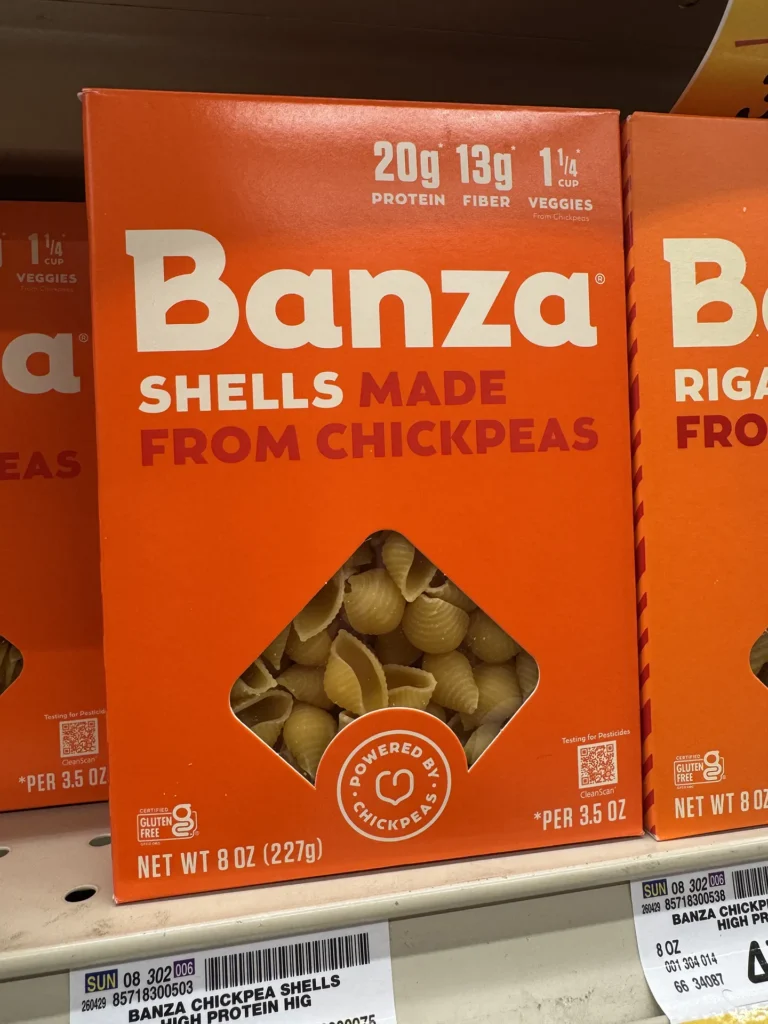
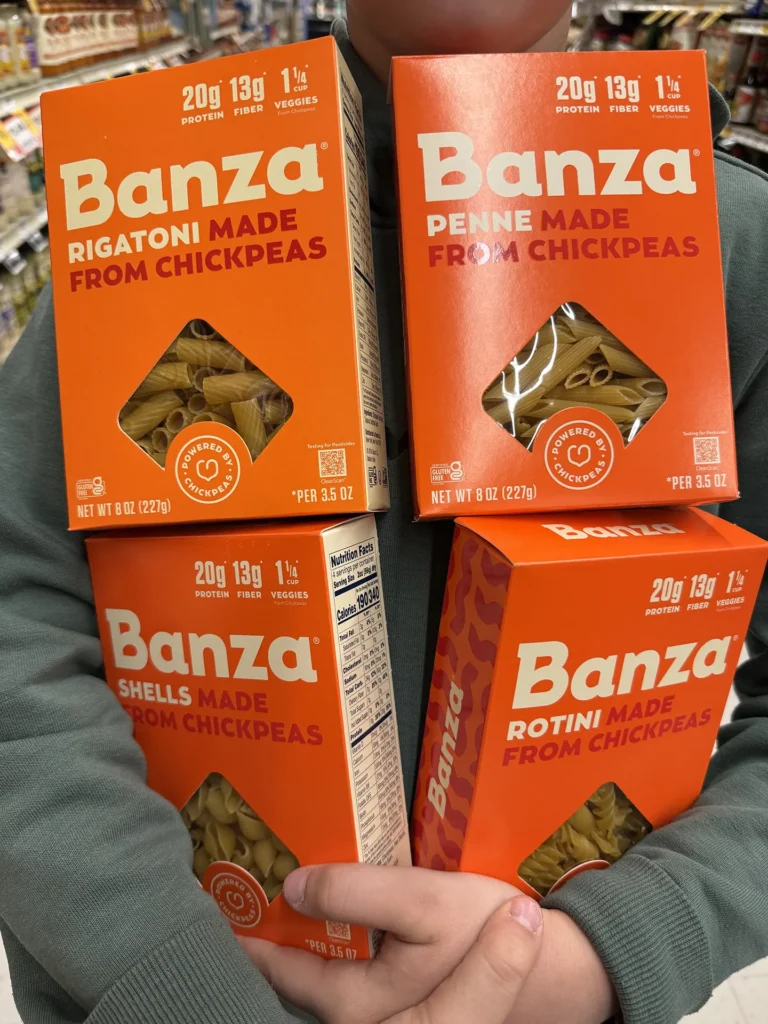
The standard 8-ounce box sits in the pasta aisle at most major grocery chains, alongside certified gluten-free competitors like Jovial brown rice penne and priced above the wheat versions. Four servings per box. The orange packaging has been consistent since the 2022-2023 refresh, and it’s hard to miss.
Pick it up and it’s noticeably lighter than wheat pasta. Shake the box and the pieces rattle differently. Chickpea flour is less dense than semolina, and you feel it before you think about it. The back of the box is honest: short ingredient list in a readable font, GFCO seal front and center, and no flashy marketing.
Banza’s chickpea pasta line spans four shapes: Penne, Rigatoni, Shells, and Rotini. The recipe is the same across all four; only the shape changes. This review is anchored on the penne, but everything noted here about taste, texture, cook window, and reheat behavior applies across the line.
Taste & Texture
Cooked to package direction (7 to 9 minutes depending on doneness), Banza penne has a firm, slightly toothy bite. It isn’t gummy or mushy the way most rice-based gluten-free pastas are. Reviewers consistently rate it the closest to wheat pasta in the category, with a faint chickpea undertone that a decent sauce covers completely. The ridges hold sauce well; rice-based pastas tend to go slick as they cool, so the sauce slides off and pools in the bowl.
Against the competition, by name:
- Barilla Gluten-Free (corn/rice blend): Barilla has a more neutral flavor but a slightly softer texture and a narrower cook window. Banza wins on protein, nutrition, and how it holds a sauce. Barilla wins on familiarity: it tastes closest to the wheat pasta you probably grew up with.
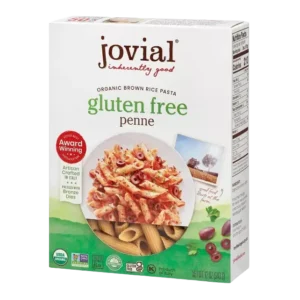
- Jovial Brown Rice Penne: Jovial wins on texture: silky, pasta-like, with a real al dente snap. But it costs more and nutritionally it’s a refined carb. If texture is all that matters, Jovial wins. If you want more protein and fiber for the same calories, choose Banza.
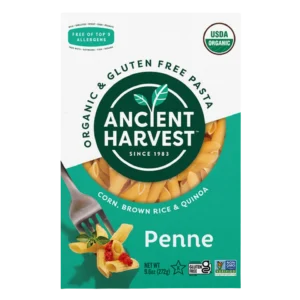
- Ancient Harvest Quinoa & Corn: More delicate and quicker to overcook, so it needs a closer eye at the stove. Banza is a bit more forgiving day to day.
Where Banza falls down is reheat, and it’s the single most common complaint across buyer reviews. The next day, cold or warmed, it goes grainy. Wheat pasta is forgiving with leftovers. Banza isn’t. If you’re buying pasta mainly for packed lunches, this will disappoint you. Best approach: cook only what you’ll eat that meal, and don’t plan on leftovers.
Nutrition & Ingredients
Per 2-ounce dry serving: 190 calories, 11 g protein, 5 g fiber, 35 g total carbs (30 g net), 3 g fat, 60 mg sodium. Four ingredients: chickpeas, pea starch, tapioca, xanthan gum. That’s it. No rice flour, no eggs, no dairy, no added oils.
The protein and fiber are what set it apart. Most gluten-free pasta is mostly rice flour, with little protein or fiber, so it fills you up only briefly. Banza’s 11 grams of protein and 5 of fiber per serving are closer to a balanced plate on their own. The net-carb difference versus wheat pasta (about 30g vs. 37g) is modest, so this isn’t a low-carb food. But the protein and fiber make a normal portion more filling, which is the practical reason to choose it.
On certification: Banza is certified gluten-free by the Gluten-Free Certification Organization (GFCO), which tests to under 10 ppm, stricter than the FDA’s 20 ppm threshold. Banza has publicly stated its pasta is produced in a dedicated gluten-free facility, which matters if you’re sensitive to trace cross-contamination. Worth re-verifying on eatbanza.com before relying on it, since facility setups can change.
How to Cook It
The one trick: pull it a full minute before the box tells you to, then finish the last minute in the sauce. This is true of all pasta, but it matters more with Banza, because the chickpea starch keeps cooking after you drain it. Follow the box time exactly and the common result, reported over and over by buyers, is pasta that falls apart against the fork. Pull it early. Finish it in the pan.
Foam management: use a bigger pot than you think. Six quarts of water per 8-ounce box, minimum. The chickpea starch foams hard in the first two minutes of the boil, and it’s the number-one way people end up scrubbing the stovetop. Skim once, or let it settle. Don’t walk away.
What works with which shape:
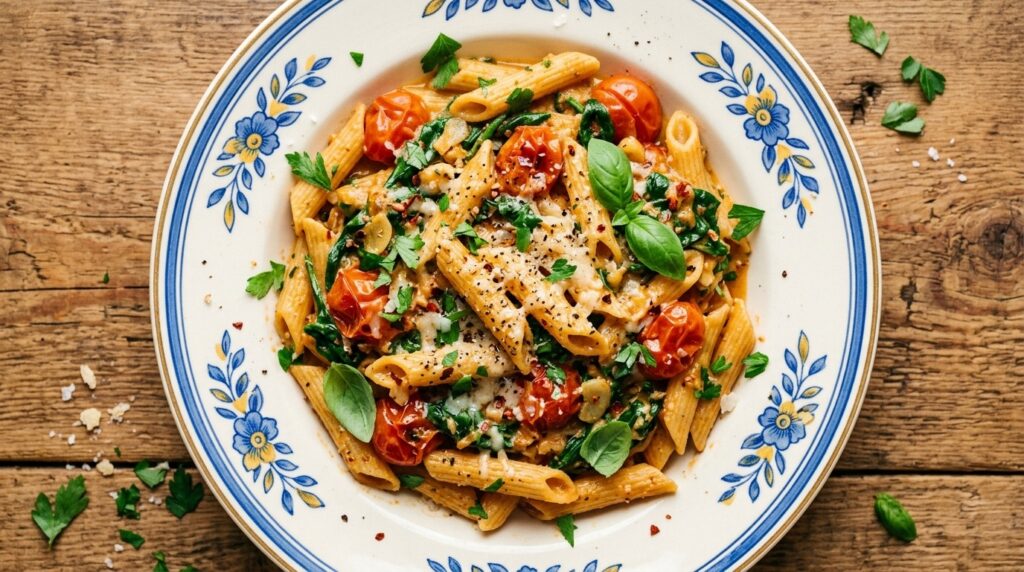
- Pesto and olive oil-based sauces: any shape works, but Rotini wins. The corkscrews trap pesto in their spirals, and the chickpea flavor disappears under basil and parmesan.
- Tomato and meat sauces (Bolognese, arrabbiata): Penne is the reliable default. For chunkier sauces with sausage or short-rib, size up to Rigatoni. The wider tubes hold larger sauce solids without breaking down.
- Baked pasta (pasta al forno, ziti-style): Rigatoni is the right call. Undercook by 2 minutes and sauce it well before baking. Don’t pre-cook fully. It turns to mush in the oven.
- Mac and cheese-style preparations: Shells. The concave bowls cup the sauce inside; you get a bite of pasta and cheese together every time. The original Banza Mac & Cheese boxed kit uses shells for a reason.
- Pasta salad (cold): Rotini is the best of an imperfect category. Banza in general firms up oddly when chilled, but the spirals hold dressing better than smooth shapes. Rinse briefly in cold water if you’re going this route.
Who It’s For (and Who Might Pass)
Good for: anyone who wants a gluten-free pasta that works as a main dish, not a compromise. Households cooking for someone who can’t have gluten. Celiacs who want GFCO certification and a dedicated gluten-free facility. Anyone who wants more protein and fiber without changing what they cook.
Might want to pass if: you want the exact texture of semolina and any departure ruins it (try Jovial brown rice). You follow a low-FODMAP diet (chickpeas are high-FODMAP). You’re cooking for someone sensitive to off-flavors or a texture change (start with a strong sauce, or skip it). You mainly want pasta for packed lunches (it reheats poorly).
The Verdict
4.3 out of 5. Banza Chickpea Penne is the best everyday gluten-free pasta for most people: a default, not a compromise. Better protein and fiber than rice-based alternatives, a texture close to wheat pasta, and a four-ingredient label. It loses points for reheating poorly and for needing a large pot and some attention to avoid foaming over. Neither is a dealbreaker. If you buy one gluten-free pasta this month, buy this one.
Where to buy: Amazon · Walmart · Target · Whole Foods · Costco
Frequently Asked Questions
Yes. Banza is certified gluten-free by GFCO, tested to under 10 ppm, stricter than the FDA's 20 ppm standard. Banza has publicly stated it's produced in a dedicated gluten-free facility, which matters for anyone sensitive to trace cross-contamination. Confirm the current facility statement on their site before your first order if you're highly sensitive.
Close, but not identical. There's a faint chickpea taste that disappears under most sauces. It's firmer than wheat pasta and more forgiving than rice-based options. Serve it with a good pesto and most people won't guess it's gluten-free.
Two common causes. Mushy means overcooked: Banza keeps cooking hard after you drain it, so pull it one full minute before the box says and finish in sauce. Foamy is just what chickpea starch does; use a larger pot (6 quarts minimum per 8-ounce box) and skim once early in the boil.
The nutrition is real. 11 grams of protein and 5 grams of fiber per 2-ounce dry serving puts it well ahead of wheat or rice pasta, which are near-zero on both. The calorie count is about the same as regular pasta, so it isn't a low-calorie food. It just has more protein and fiber, and that changes how full you feel on the same amount of food.
Depends on what matters most to you. Barilla's gluten-free blend (corn and rice) tastes more like the wheat pasta you remember but has weaker nutrition and a narrower cook window. Banza has a lot more protein and fiber, holds sauce better, and has stronger certification. For weeknight cooking, Banza. For grandma's baked ziti with the exact texture, Barilla.
Not well. The texture gets noticeably worse: it goes grainy and loses its bite. Best eaten fresh or sauced right after cooking. If you're meal-prepping, make the sauce ahead and boil fresh pasta the day you eat it. It takes eight minutes.
It can, for some people. Chickpeas are legumes, and legumes are high in FODMAPs. Most people are fine with a standard 2-ounce serving, but if chickpeas, lentils, or beans usually bother you, you'll know after one dinner. If you follow a low-FODMAP diet, skip it entirely.
Costco multipacks are usually the best per-unit price if you have a membership. Amazon's multipack is the next best for most shoppers. Walmart, Target, and most grocery stores carry single boxes at normal pricing, and Whole Foods usually has the full shape lineup.
Have you tried Banza Chickpea Penne? Tell us how it held up in the reviews below.
Customer Reviews
Been buying this for two years. The penne holds up in baked dishes if you undercook it slightly first. Only complaint is the price compared to regular pasta, but the protein makes lunch actually filling.
Texture is better than any rice pasta I have tried but the leftovers the next day were chalky and dry. Fine if you eat it all fresh. Kids liked it with butter and parmesan.
Made this for my celiac daughter and the rest of the family could not tell the difference with a good vodka sauce. It does foam like crazy in the pot, wish I had read the box first. Would buy again.
I was skeptical about chickpea pasta but Banza completely won me over. The penne holds sauce beautifully and my kids didn't even notice the difference from regular pasta. We go through two boxes a week now. The extra protein is a huge bonus for our family.
star star star star star Write a Review expand_more